






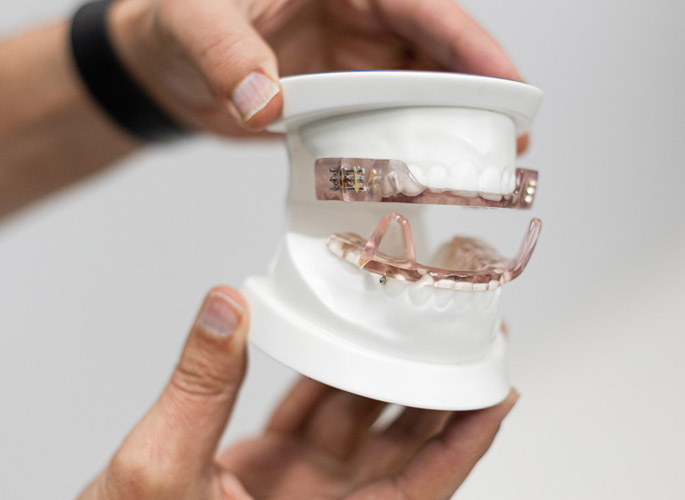
Snoring and obstructive sleep apnoea (OSA) are clinical conditions that can impact your sleep quality and general health. At Bond St, we provide oral appliance therapy, utilising custom-fitted devices designed to assist in maintaining an open airway during sleep.
Our dental team works in conjunction with sleep physicians to ensure a coordinated approach to your care. Following a formal diagnosis from a medical professional, we can assess your suitability for a mandibular advancement splint to help manage these conditions.
Important Information: All dental procedures carry risks. A consultation is required to determine suitability for any treatment. Results vary between individuals and depend on clinical factors and patient compliance. Any surgical or invasive procedure carries additional risks; before proceeding, you should seek a second opinion from an appropriately qualified health practitioner.
Obstructive sleep apnoea (OSA) occurs when the soft tissues in the throat relax and temporarily obstruct the airway during sleep. This can lead to brief periods where breathing is interrupted. In response, the brain triggers a brief arousal to reopen the airway, often so quickly that the individual is unaware they have woken.
For those with more severe OSA, these interruptions can occur frequently throughout the night. This fragmented sleep typically results in reduced sleep quality and may be associated with longer-term health considerations if left unmanaged.
Similar to sleep apnoea, snoring occurs when the soft tissues in the throat relax, narrowing the airway. As air is drawn in, these tissues vibrate, creating the sound of snoring.
While snoring is a common symptom of obstructive sleep apnoea (OSA), not everyone who snores has the condition. However, frequent snoring can impact sleep quality for both the individual and their partner. If snoring is persistent, it is recommended to seek a clinical assessment to determine the underlying cause and discuss appropriate management options.
Obstructive Sleep Apnoea (OSA) can present in various ways. While these symptoms do not provide a diagnosis on their own, they are often associated with sleep-disordered breathing:
Excessive daytime sleepiness or fatigue.
Reduced concentration and memory.
Changes in mood or increased irritability.
Frequent waking during the night (nocturia).
Observed snoring, gasping, or choking sounds during sleep.
If you recognise these indicators, the first step is to consult with a General Practitioner or Sleep Physician for a formal clinical assessment.
Managing snoring and obstructive sleep apnoea (OSA) is an important aspect of maintaining long-term health. When sleep is consistently interrupted by airway obstruction, it can impact the body’s cardiovascular and metabolic systems.
Clinical research has identified that untreated OSA may be associated with an increased risk of several health considerations, including:
Cardiovascular strain and high blood pressure.
Impacted cognitive function and memory.
Daytime fatigue affecting productivity and mood.
Reduced metabolic efficiency.
Addressing sleep-disordered breathing through a coordinated approach between your GP, sleep physician, and dentist is essential for supporting your overall health
Snoring and obstructive sleep apnoea are typically influenced by a combination of anatomical and lifestyle factors. While age and body weight are common risk factors, several other elements can contribute to the narrowing or obstruction of the airway during sleep:
Facial Anatomy: The structure of the jaw and the size of the tongue or soft tissues.
Upper Airway Obstruction: Such as enlarged tonsils or persistent nasal congestion.
Lifestyle Factors: Including alcohol consumption and the use of certain sedative medications.
Medical Conditions: Such as specific thyroid disorders or hormonal imbalances.
Determining the exact cause of sleep-disordered breathing requires a comprehensive clinical evaluation by a medical professional.

At Bond St, we help you identify the dental solutions best suited to your clinical needs. Starting with a comprehensive assessment and consultation, we provide personalised care throughout every stage of your treatment. Contact our South Yarra clinic to arrange a consultation and discuss your suitability for treatment.